
Calligraphy and Painting by Chinese Buddhist Monastics Worldwide Venerable Mingyang: White Clouds Unbound, Clear Springs and Fragrant Blossoms
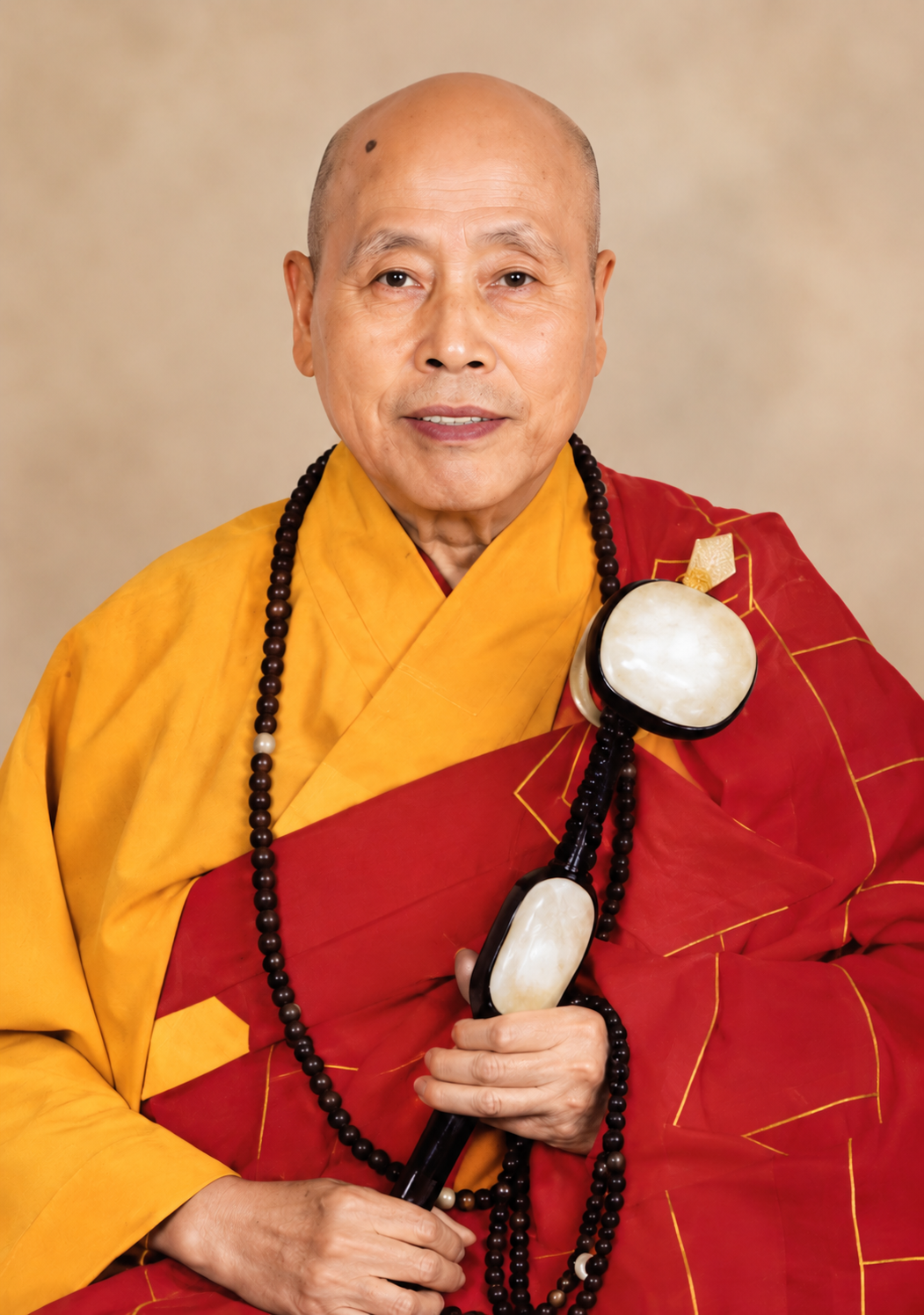
Venerable Ming Yang
Venerable Mingyang (1916–2002), a native of Minhou, Fujian Province, was born with the secular name Xintao. From an early age, he developed a deep affinity with Buddhism. At the age of ten, he accompanied his mother to hear Venerable Yuanying lecture on the Dharma at Baita Temple in Fuzhou, an experience that inspired his wish to enter monastic life. The following year, he participated in a Chan retreat at Xuefeng Temple. In 1927, he was ordained under Venerable Yuanying at Chongsheng Temple on Xuefeng Mountain, receiving the Dharma name Rixin and the name Mingyang. From then on, he remained closely associated with his teacher for many years.
In 1930, Venerable Mingyang followed Venerable Yuanying to Tiantong Temple in Ningbo, where he received full ordination and continued his study of the Buddhist teachings. When Venerable Yuanying gave Dharma lectures, he would sometimes ask the young Mingyang to present the teachings again afterward. Because of his remarkable intelligence and eloquence, Mingyang became known at the time as the “Prodigy Dharma Master.”
Venerable Mingyang’s lifelong practice and Dharma work were deeply connected with his teacher, Venerable Yuanying. He inherited Yuanying’s Chan Dharma lineages and became a 41st-generation lineage holder of the Linji tradition and a 47th-generation lineage holder of the Caodong tradition. Venerable Yuanying embraced an integrated approach to Buddhist practice, with particular emphasis on the Śūraṅgama Sūtra and the combined practice of Chan and Pure Land. Mingyang carried forward his teacher’s vision, placing importance on both Buddhist study and practice while devoting much of his life to Dharma propagation and monastic education.
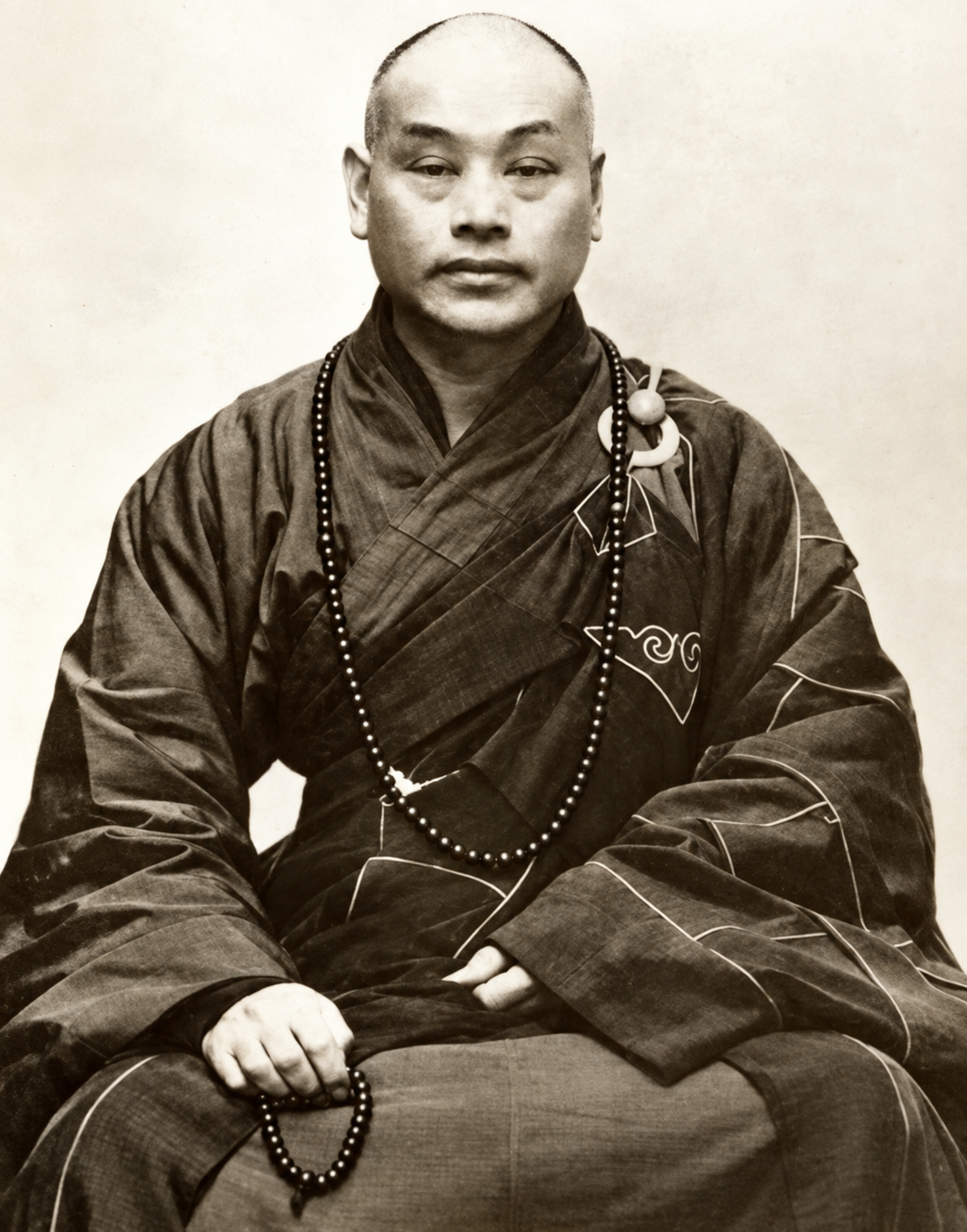
Venerable Yuan Ying
During the War of Resistance against Japanese Aggression, Venerable Mingyang accompanied Venerable Yuanying in Buddhist relief efforts and fundraising missions to Southeast Asia. He was also detained by the Japanese authorities together with his teacher. After the war, Venerable Yuanying founded the Śūraṅgama Studies Academy at Yuanming Lecture Hall in Shanghai, where Mingyang took part in both academic administration and teaching. Following Yuanying’s passing in 1953, Mingyang succeeded him as abbot of Yuanming Lecture Hall and continued the work of teaching the Dharma and educating monastics.
Despite the profound social changes that followed, Venerable Mingyang remained committed to Buddhist life and service. In 1983, through his efforts, Yuanming Lecture Hall and the Venerable Yuanying Memorial Hall in Shanghai were restored. He later served as abbot of Longhua Temple in Shanghai and several other monasteries, while continuing to contribute to Buddhist education, temple restoration, and cultural exchange.
From entering monastic life as a young man and studying closely under Venerable Yuanying, to inheriting both the Linji and Caodong lineages, restoring monasteries, and educating later generations, Venerable Mingyang’s life carried forward more than the legacy of any single temple. It embodied the continuity of Dharma lineage and responsibility passed from one generation of monastics to the next.
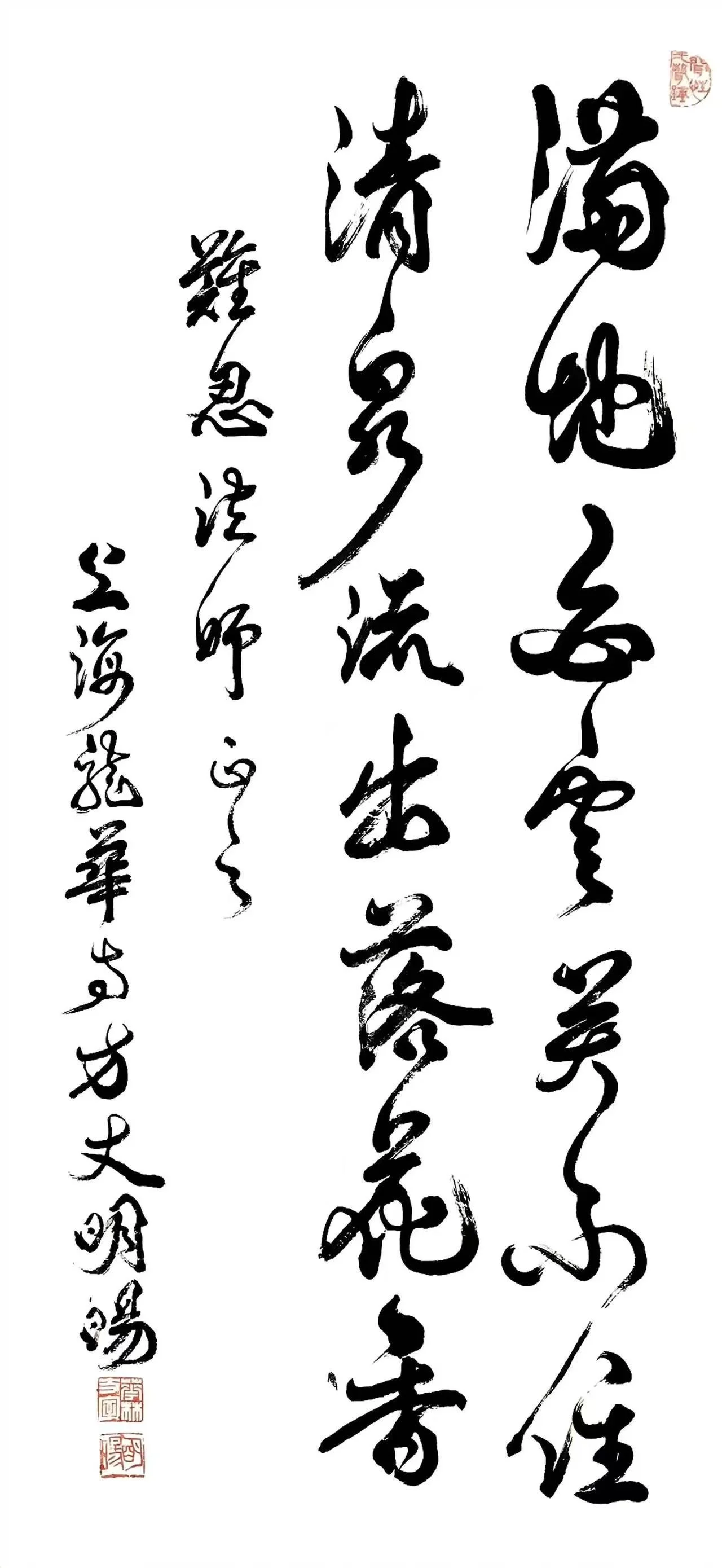
A Work of Calligraphy, a Dharma Connection
In the 1980s, Chen Shaogong practiced Buddhism under the Dharma name Nanren and formed a Dharma connection with Venerable Mingyang. This work of calligraphy was personally presented to him by Venerable Mingyang and has remained in his collection for decades, preserved through the many changes of life.
Chen Shaogong later settled in the United States, where he has long been engaged in promoting Buddhist culture and Chinese calligraphy. He currently serves as President of the International Huayan Association.
Venerable Mingyang wrote:
White clouds cover the earth, yet cannot be confined;
A clear spring flows forth, carrying the fragrance of fallen blossoms.
Viewed through a Buddhist lens, the line “White clouds cover the earth, yet cannot be confined” may evoke the awakened nature, or Buddha-nature, inherent in all beings. This awakened nature is intrinsically present. It is neither confined to a particular place nor something that must be sought outside ourselves. It is everywhere, unobstructed and unbound, like white clouds freely unfolding across the sky.
When we come to recognize this, the world itself does not become another world; rather, the mind with which we encounter it has changed. “A clear spring flows forth, carrying the fragrance of fallen blossoms” evokes a state of clarity, freedom, and natural ease. The spring flows naturally; fallen blossoms follow conditions as they arise. As discrimination and attachment gradually loosen, even the most ordinary things before us can reveal their inherent beauty.
Awakened nature is everywhere, unobstructed and unbound. When the mind is clear, springs, flowing water, and fallen blossoms—all reveal beauty.
This work, therefore, is more than a piece of calligraphy. Written by a Buddhist monastic and preserved for decades through a Dharma connection, it carries not only words in ink, but also the memory of a relationship, a spiritual affinity, and a piece of Buddhist cultural history spanning generations.
What Calligraphy and Painting by Chinese Buddhist Monastics Worldwide Seeks to Preserve
This is precisely what Calligraphy and Painting by Chinese Buddhist Monastics Worldwide seeks to preserve.
We are documenting more than individual works of calligraphy and painting. Through these works, scattered across different parts of the world, we hope to rediscover the people behind them—their teachers and lineages, their practice, their monasteries, and the stories of lives devoted to sharing the Dharma.
Why was a particular work created? To whom was it given? Why has it remained treasured decades later? And what kind of life was lived by the monastic who created it?
When works of art are reconnected with these life stories, calligraphy and painting become more than ink on paper. They become historical witnesses to the practice and Dharma work of generations of Chinese Buddhist monastics.
One monastic, one monastery, one Dharma lineage;
One brush, one stroke of ink, one lifetime of practice.
Global Call for Submissions
Calligraphy and Painting by Chinese Buddhist Monastics Worldwide is now inviting submissions from Chinese Buddhist monastics around the world. Materials may include works of calligraphy or painting, biographical information, accounts of Buddhist practice and monastic life, stories of Dharma propagation, as well as photographs and historical materials relating to the monastic and their temple or Dharma center.
If you are a Buddhist monastic, or if you preserve calligraphy, paintings, photographs, or other valuable materials related to a monastic, we warmly welcome your participation in this effort to document and preserve this living heritage.
Global Call for Submissions | View Submission Details →