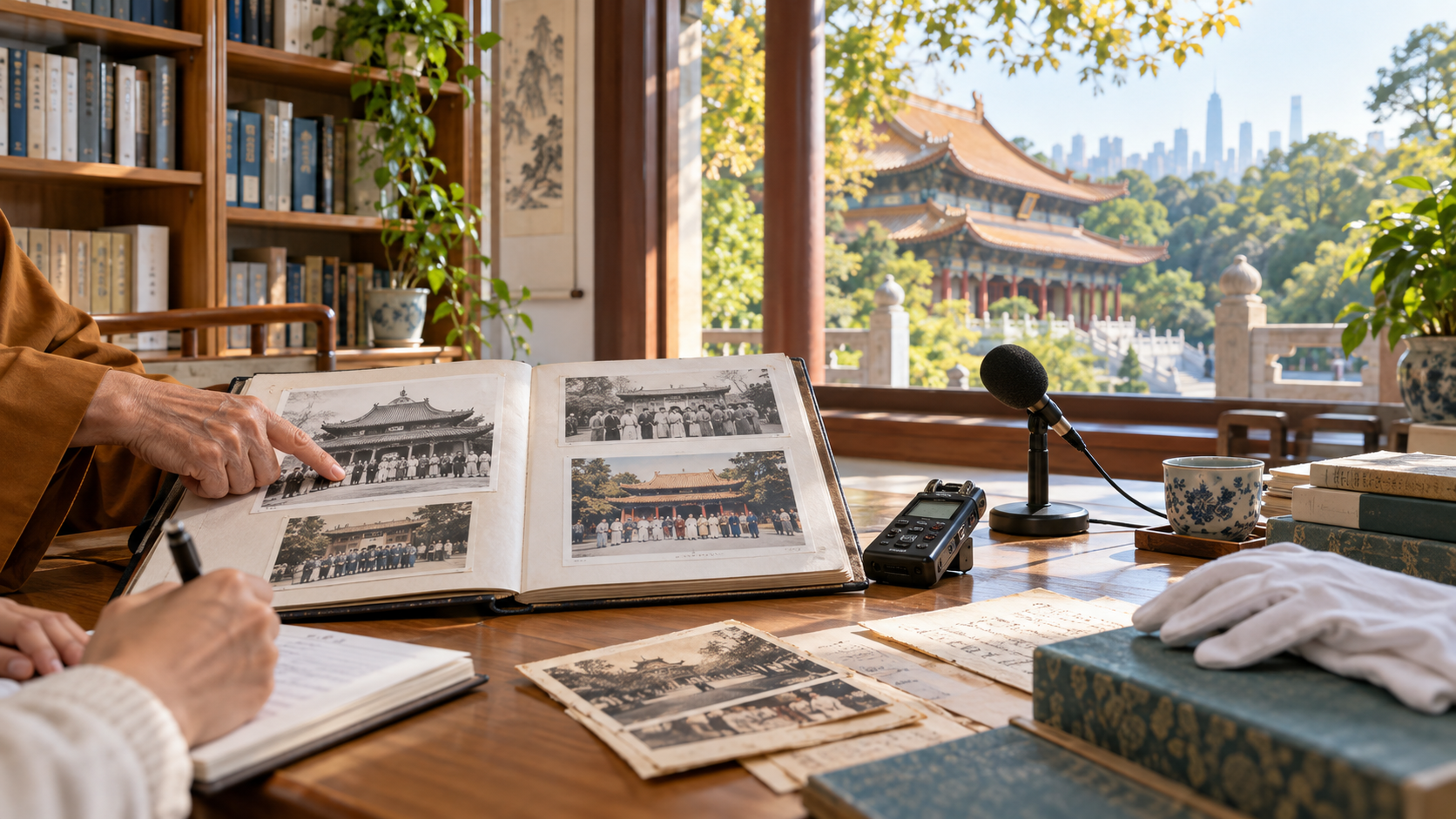
Over the past several decades, Chinese Buddhism has accompanied Chinese immigrants to the United States, gradually establishing temples and Dharma centers throughout the eastern region of the country. Behind every temple is a remarkable story: the original aspiration that brought it into being, the challenges of establishing a place of practice, the transmission of Dharma lineages, and the dedication of generations of monastics and lay supporters.
These experiences belong not only to individual temples. Together, they form an important chapter in the history of Chinese Buddhism in America. Yet many of the people who witnessed these early years are growing older, while valuable memories, photographs, and historical materials remain scattered among individuals and temples. Without timely documentation, some of these firsthand accounts may gradually disappear.
For this reason, The International Hua Yan Buddhist Federation has initiated Dharma Lineages Take Root in the East: An Oral History of Chinese Buddhist Temples in the Eastern United States. Through the voices of those who lived this history, the project will document how Chinese Buddhism arrived in the eastern United States, established temples, transmitted the Dharma, served local communities, and became part of the wider society.
By bringing these dispersed memories together in a book, we hope to preserve an authentic and meaningful cultural record for today and for generations to come.
How We Document the History
The project will focus on one temple or Dharma center at a time. We will interview abbots, founders, early participants, and longtime supporters, inviting them to share the founding circumstances, development, Dharma lineage, key individuals, teaching traditions, community activities, and social contributions of each temple.
With the consent of participants, we will also collect historically significant photographs, documents, and related materials. Important dates, names, and events will be carefully reviewed and verified whenever possible.
Interviews will be recorded through audio, video, and written documentation. The material will then be organized and edited while preserving the individual voice of each speaker and presenting the history of every temple with clarity and integrity.
From Living Memory to Cultural Archive
The principal outcome of this project will be a published book, supported by a growing cultural archive of written accounts, photographs, audio recordings, and video interviews. Selected stories may also be shared through feature articles and short films, helping a wider audience understand the development of Chinese Buddhist temples in the eastern United States.
This book will record more than buildings, dates, and institutional histories. It will preserve the aspirations, choices, dedication, and perseverance of generations of monastics and lay supporters. Together, their individual stories reveal how Chinese Buddhism took root, grew, and became part of life in America.
Years from now, these voices and materials will allow future generations to understand the cultural and spiritual life of Chinese Buddhist communities during this important period, as well as their contributions to immigrant communities and American society.
Help Us Preserve This History
Oral history is a long-term cultural undertaking. Every stage—from initial outreach, travel, and interviews to photography, filming, transcription, historical verification, translation, editing, and publication—requires sustained time and resources.
Your support will help us visit more temples, record more firsthand accounts, preserve valuable photographs and documents, and complete the editing and publication of Dharma Lineages Take Root in the East.
Together, we can ensure that the voices of those who lived this history become a lasting cultural record for future generations.