
Calligraphy and Painting by Chinese Buddhist Monastics Worldwide — Venerable Zhenchan: One Character, “Ren,” a Lifetime of Practice
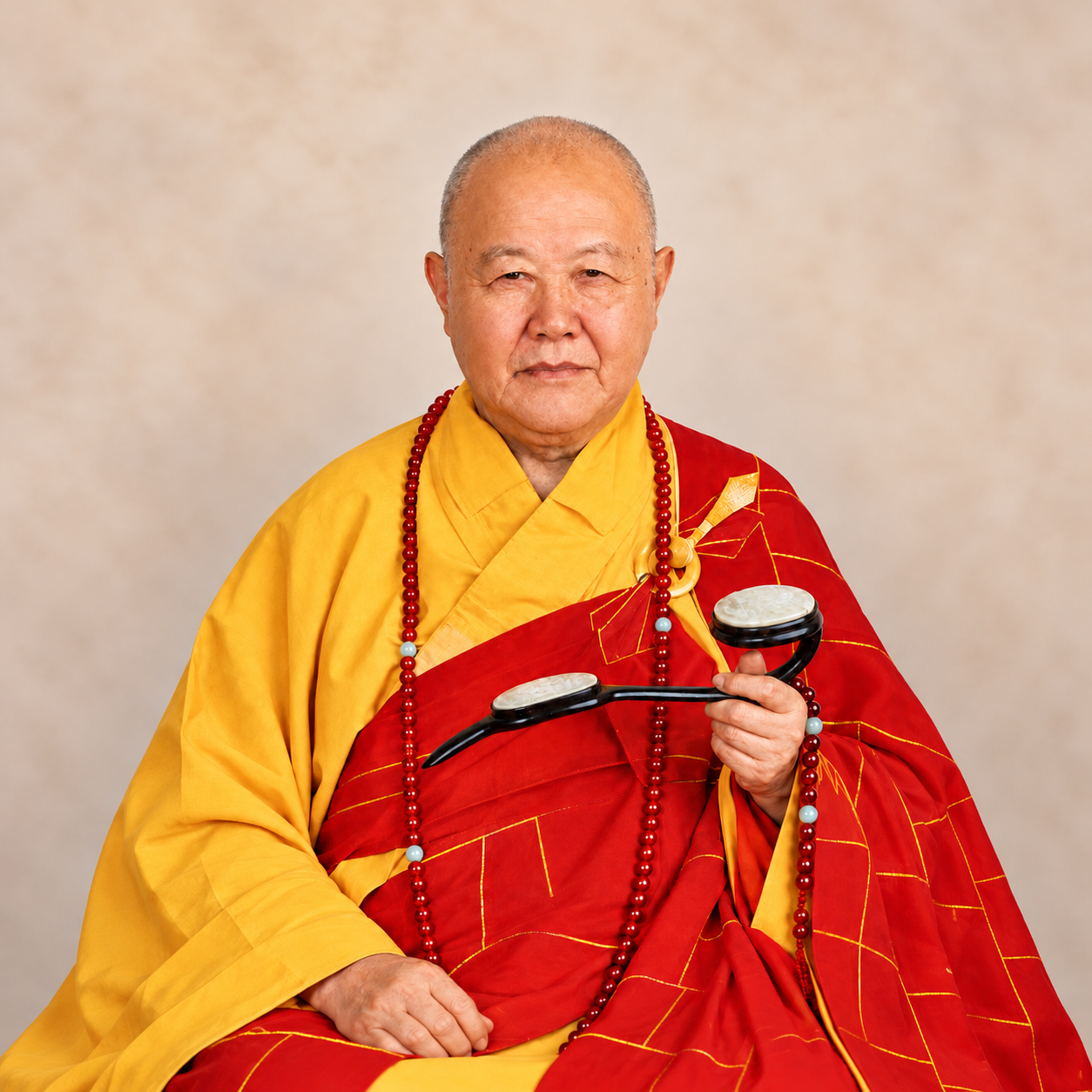
Venerable Zhenchan
Venerable Zhenchan (1916–1995), a native of Dongtai, Jiangsu Province, was born with the secular name Wang Heshu. He served as Vice President of the Buddhist Association of China, President of the Shanghai Buddhist Association, and President of the Shanghai Buddhist Academy. He also served as abbot of the Jade Buddha Temple and Jing'an Temple in Shanghai, as well as Daxiangguo Temple in Kaifeng, Henan Province.
In 1921, Venerable Zhenchan entered monastic life at Jingtu Monastery in Anfeng, his hometown. In 1931, he received full ordination at Longchang Monastery on Mount Baohua in Nanjing. He subsequently studied Buddhist scriptures and teachings at several Buddhist academies, learning under distinguished masters including Yingci, Yuanying, Changxing, and Zhenhua. He carried forward the Linji tradition of Chan Buddhism, placed particular importance on Huayan Buddhist teachings, and emphasized the integration of scriptural study with actual practice.
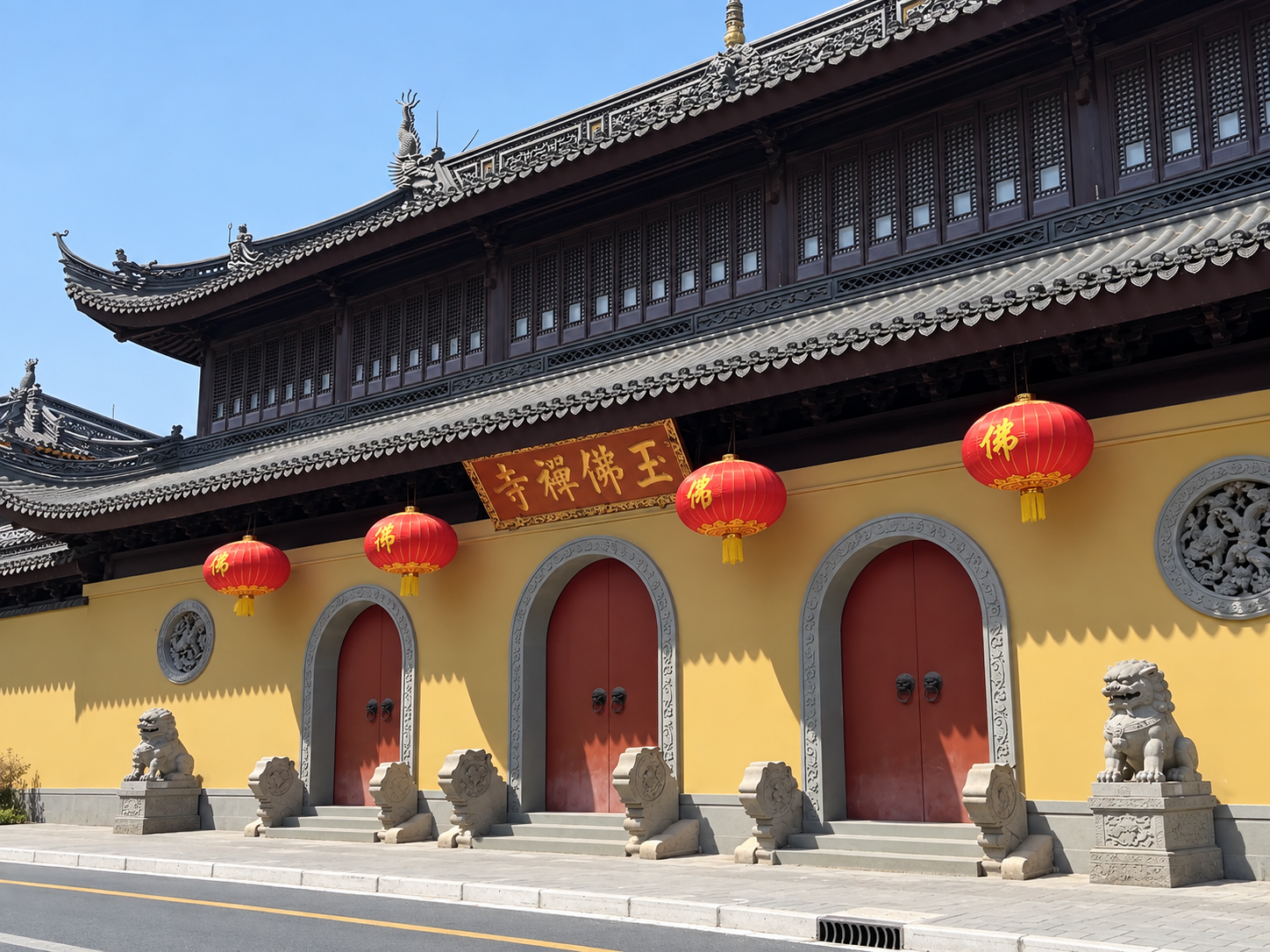
Jade Buddha Temple, Shanghai
In 1942, at the invitation of Venerable Zhenhua, Zhenchan came to the Jade Buddha Temple in Shanghai to assist with the administration of the Shanghai Buddhist Academy. During the turbulent years that followed, he and several fellow monks remained at the temple, enduring considerable hardship to protect and preserve it.
In 1979, he formally became abbot of the Jade Buddha Temple. In 1983, he led the reopening of the Shanghai Buddhist Academy, dedicating himself to the education and training of young Buddhist monastics. The Jade Buddha Temple, located on Anyuan Road in Shanghai's Putuo District, bears witness to his lifelong efforts to preserve Buddhist institutions and nurture future generations.
Venerable Zhenchan was also a dedicated Buddhist writer. His published works include Collected Writings from the Abbot’s Quarters at the Jade Buddha Temple (《玉佛丈室集》). He traveled overseas on numerous occasions to share Buddhist teachings and promote cultural exchange. Deeply committed to charitable work, he supported education, social welfare, and the care of children with disabilities.
In 1995, he donated the entire two million yuan received as offerings for his eightieth birthday celebration to social welfare causes. He passed away on December 1 of that year.
From entering monastic life as a child and pursuing Buddhist studies to preserving temples and educating later generations, Venerable Zhenchan devoted his life to putting Buddhist teachings into practice through Dharma propagation, education, and compassionate service.
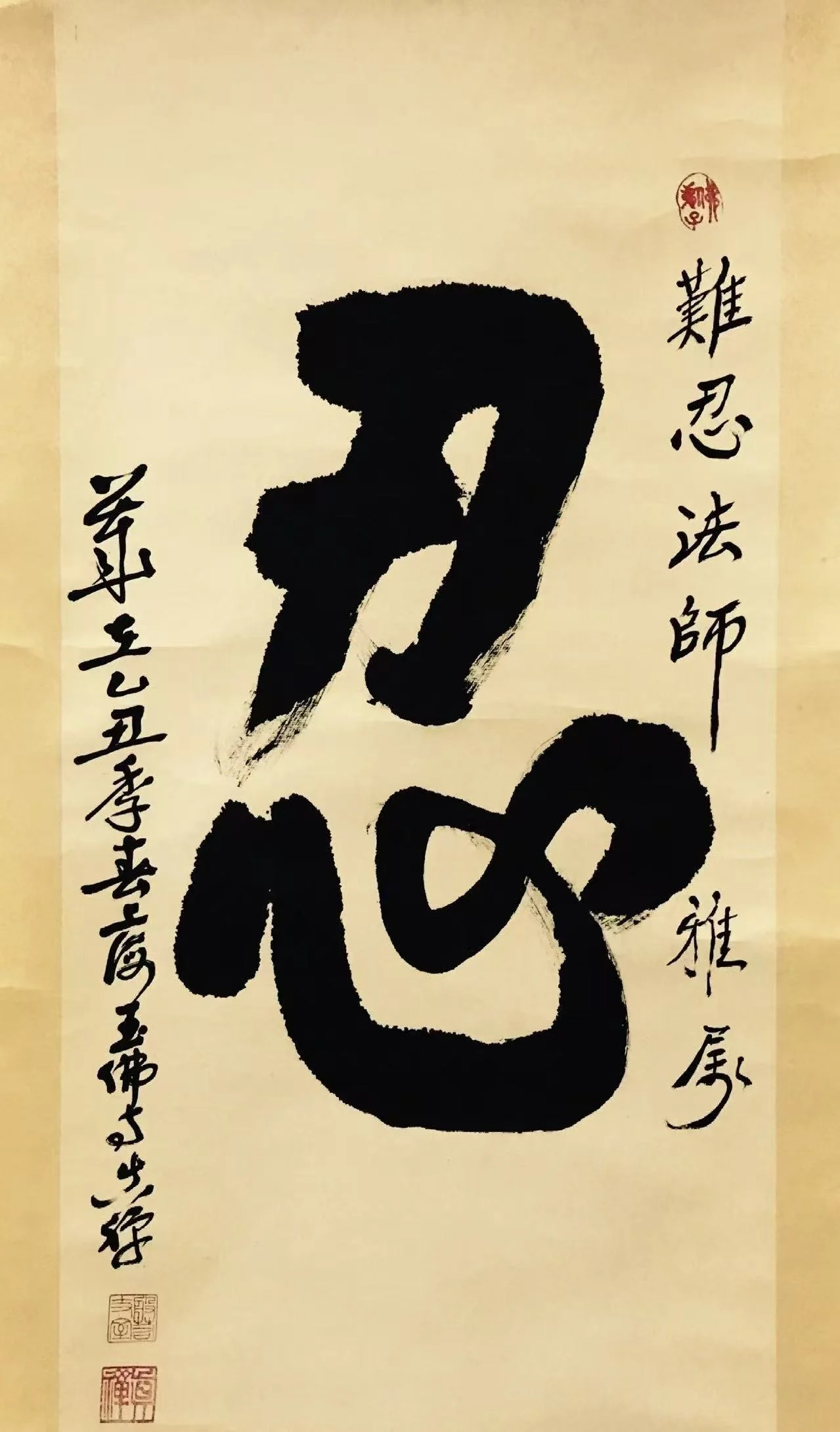
Calligraphy by Venerable Zhenchan
A Work of Calligraphy, a Dharma Connection
In the 1980s, Chen Shaogong practiced Buddhism under the Dharma name Nanren and formed a Dharma connection with Venerable Zhenchan. This work of calligraphy, featuring the single Chinese character “忍” (Ren), was written by Venerable Zhenchan at his request and has remained carefully preserved for decades.
Chen Shaogong later settled in the United States, where he has long been engaged in promoting Buddhist culture and Chinese calligraphy. He currently serves as President of the International Huayan Buddhist Federation.
On the right side of the work is the inscription “难忍法师雅属,” meaning “Respectfully written at the request of Dharma Master Nanren.” On the left appears the inscription “岁次乙丑季春,玉佛寺真禅,” identifying the calligrapher as Zhenchan of the Jade Buddha Temple and dating the work to late spring of the Yichou year.
The Yichou year corresponds to 1985, while “late spring” refers to the final month of spring in the traditional Chinese calendar. The expression yazhu (雅属) is a traditional courtesy used in Chinese calligraphy and painting to indicate that a work was created at someone's request.
Venerable Zhenchan wrote:
忍
Ren — Forbearance
The composition is dominated by a single large character, written with bold, powerful brushstrokes and a calm, dignified presence. The upper portion is compact and strong, while the lower component, representing the heart or mind, opens into broad, flowing strokes. The contrast between the central character and the delicate inscriptions on either side gives the work a striking visual balance.
The character “Ren” also carries a special significance in relation to Chen Shaogong's Dharma name, Nanren, meaning “difficult to endure.”
The name and the character together invite a deeper reflection: Life presents many situations that are difficult to bear, but what does it truly mean to practice forbearance in Buddhism?
In Buddhist teaching, forbearance does not simply mean silently enduring mistreatment or suppressing anger and resentment. Rather, kshanti, the practice of patience and forbearance, encourages us to recognize what is happening within our own minds when we encounter adversity, misunderstanding, or disappointment, without allowing passing emotions to control our responses.
In everyday life, an unpleasant remark may provoke anger. An unexpected setback may create anxiety. When our kindness is misunderstood or unappreciated, we may feel hurt or resentful.
When these emotions arise, can we first observe our own minds? Can we recognize anger as it arises, become aware of feelings of hurt, and refrain from immediately turning these emotions into words or actions?
This is how forbearance can become part of everyday Buddhist practice.
Forbearance does not mean abandoning one's principles or remaining silent in the face of problems. Matters that require attention must still be addressed, and responsibilities must still be fulfilled. Yet when the mind is no longer dominated by immediate emotional reactions, we are better able to understand situations clearly and respond with wisdom.
Looking back on Venerable Zhenchan's life, we can appreciate another dimension of forbearance. Through years of social upheaval, he remained committed to preserving Buddhist temples. He later helped restore Buddhist education, trained younger generations of monastics, and devoted himself to Dharma propagation and charitable activities.
His life reminds us that forbearance is not only the ability to remain calm in difficult moments. It is also the strength to remain faithful to one's original aspirations and persevere through years of challenges.
Forbearance is not about suppressing the mind, but understanding it. It is not passive endurance, but the ability to remain clear-minded and act with wisdom in the face of adversity.
This work, therefore, is more than a piece of calligraphy. Written by a Buddhist master and preserved for decades through a Dharma connection, the single character “Ren” carries both a personal history and a reminder of Buddhist practice.
It preserves a meaningful connection between Venerable Zhenchan and Chen Shaogong, while inviting future generations to reflect upon the meaning of patience, awareness, and perseverance in their own lives.
What Calligraphy and Painting by Chinese Buddhist Monastics Worldwide Seeks to Preserve
This is precisely what Calligraphy and Painting by Chinese Buddhist Monastics Worldwide seeks to preserve.
We are documenting more than individual works of calligraphy and painting. Through these works, scattered across different parts of the world, we hope to rediscover the people behind them—their teachers and lineages, their practice, their monasteries, and the stories of lives devoted to sharing the Dharma.
Why was a particular work created? To whom was it given? Why has it remained treasured decades later? And what kind of life was lived by the monastic who created it?
When works of art are reconnected with these life stories, calligraphy and painting become more than ink on paper. They become historical witnesses to the practice and Dharma work of generations of Chinese Buddhist monastics.
One monastic, one monastery, one Dharma lineage;
One brush, one stroke of ink, one lifetime of practice.
Global Call for Submissions
Calligraphy and Painting by Chinese Buddhist Monastics Worldwide is now inviting submissions from Chinese Buddhist monastics around the world. Materials may include works of calligraphy or painting, biographical information, accounts of Buddhist practice and monastic life, stories of Dharma propagation, as well as photographs and historical materials relating to the monastic and their temple or Dharma center.
If you are a Buddhist monastic, or if you preserve calligraphy, paintings, photographs, or other valuable materials related to a monastic, we warmly welcome your participation in this effort to document and preserve this living heritage.
Global Call for Submissions | View Submission Details →