International Hua-Yan Buddhist Federation Visits Lumbini Buddhist University
A Buddhist Cultural Exchange in the Birthplace of the Buddha
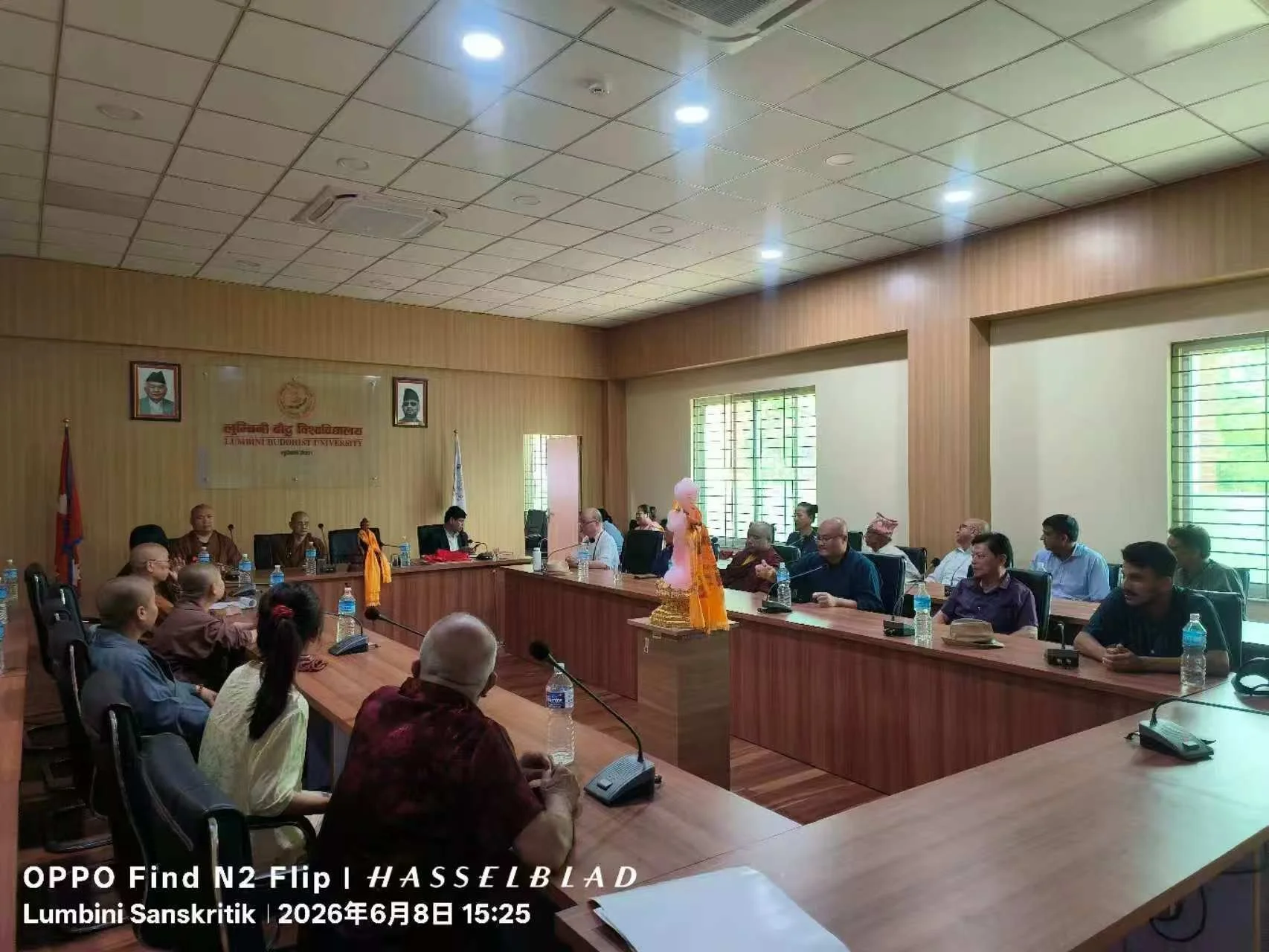
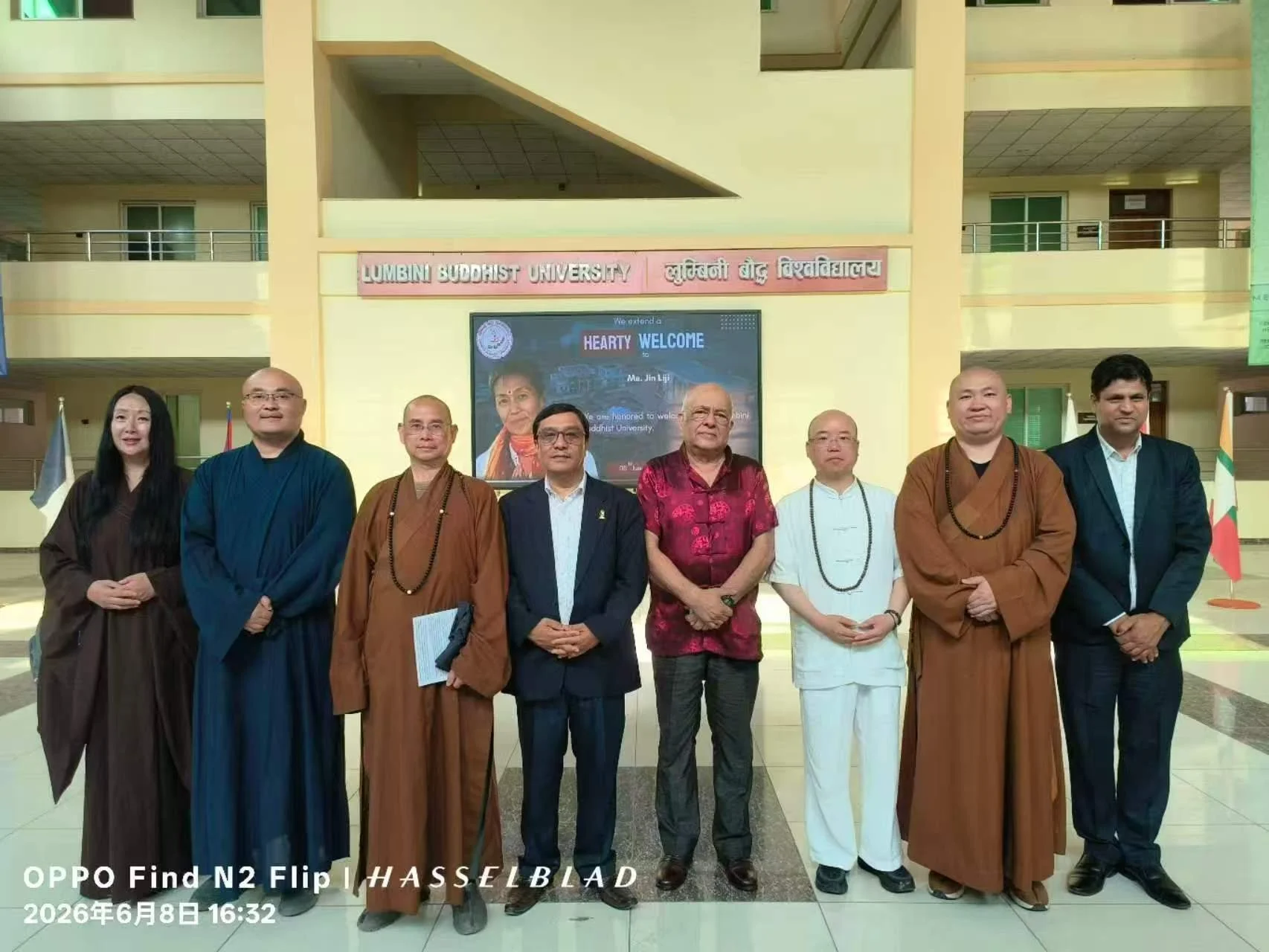
On June 8, 2026, the International Hua-Yan Buddhist Federation’s Nepal and Bhutan pilgrimage group arrived in Lumbini, Nepal—the birthplace of Shakyamuni Buddha. During the pilgrimage, the delegation visited Lumbini Buddhist University and joined the university in a Buddhist cultural exchange.
Lumbini is revered by Buddhists around the world as the birthplace of Shakyamuni Buddha. Coming to the Buddha’s birthplace was not only a pilgrimage, but also an opportunity for people from different countries and Buddhist traditions to meet, learn from one another, and share the Dharma.
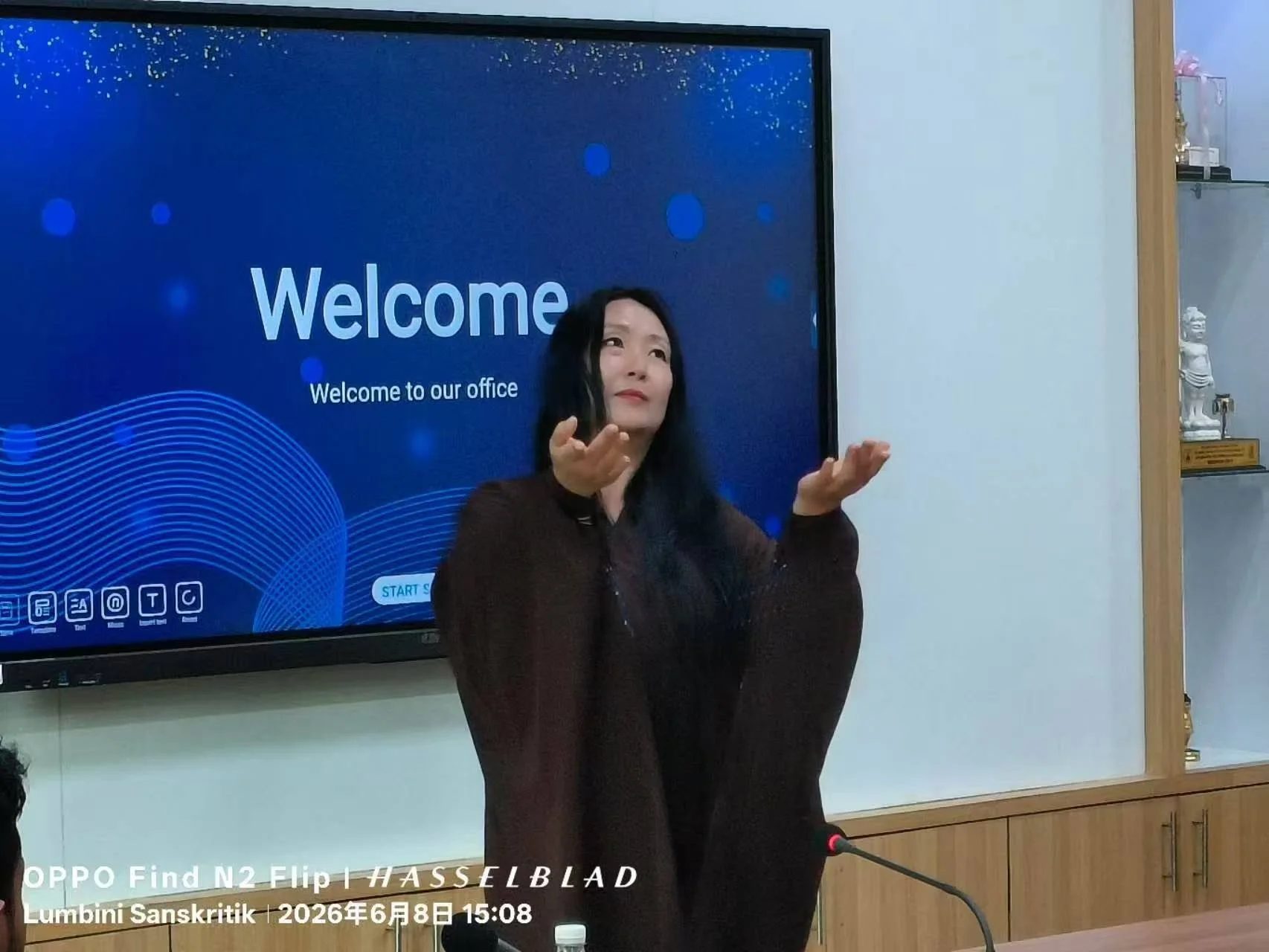
The program opened with expressions of devotion rooted in the Chinese Buddhist tradition. Pingping Huang offered a Zen-inspired dance, followed by Venerable Yanxiang chanting a hymn in praise of Shakyamuni Buddha. Through movement and Buddhist chanting, the opening expressed reverence for and remembrance of the Buddha.
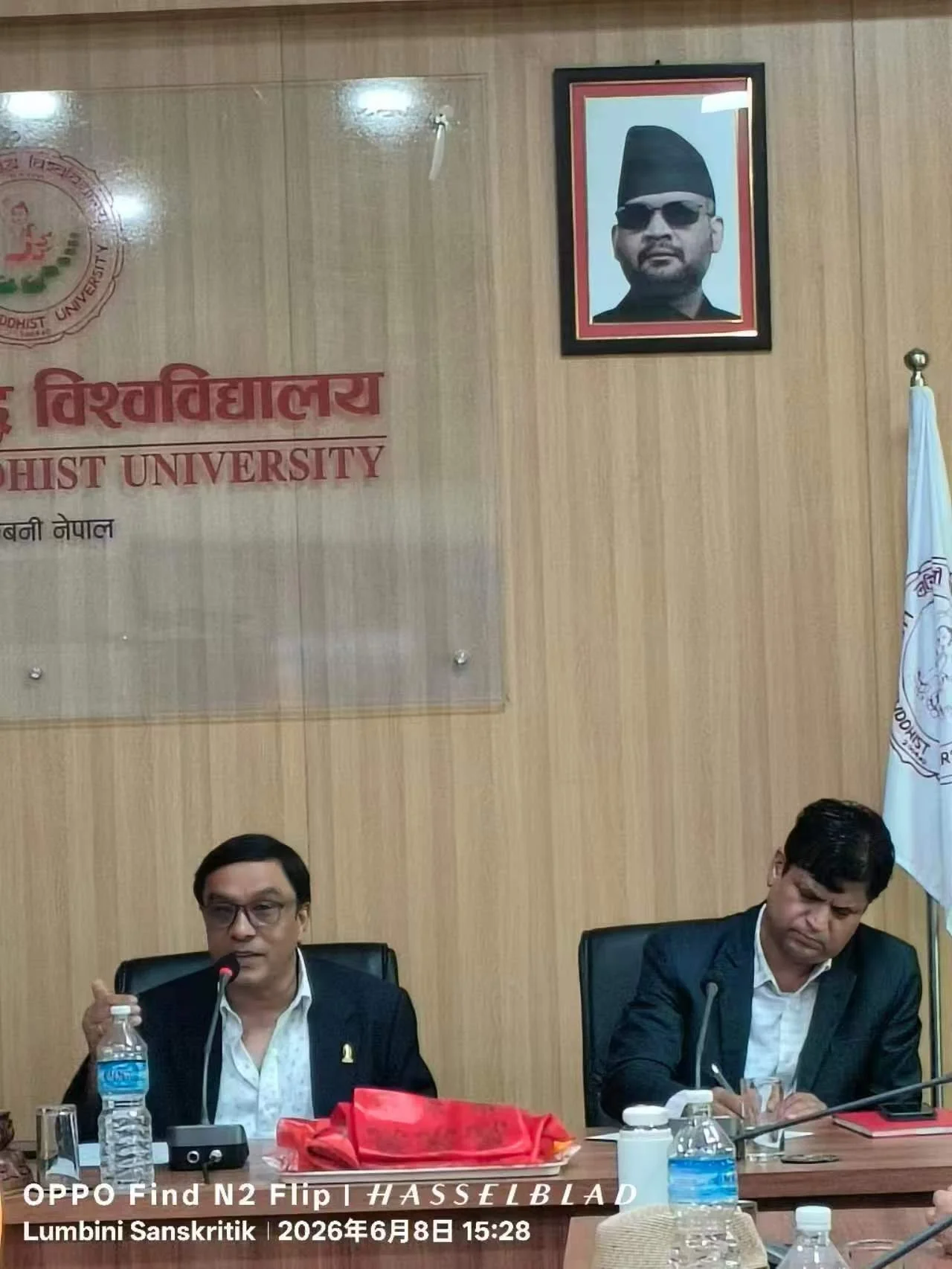
Representatives of the International Hua-Yan Buddhist Federation and Lumbini Buddhist University then delivered remarks and engaged in dialogue. Speakers from the visiting delegation included Venerable Zhengru, Venerable Zhilong, Mr. Xu Punan, and Mr. Chen Shaogong. On behalf of the university, Dr. Manik Ratna Shakya, President of Lumbini Buddhist University, together with the Vice President and other university representatives, welcomed the delegation and shared their perspectives. The exchange touched on Buddhist education, Buddhist culture, and opportunities for future international Buddhist cooperation.
Experiencing the Mind Through a Cup of Tea
As part of the program, the International Hua-Yan Buddhist Federation invited guests, faculty, and students of Lumbini Buddhist University to experience Zen Tea Meditation, one of the Federation’s key initiatives.
Zen Tea Meditation is not simply about drinking tea, nor is it merely about learning a Buddhist concept. Using something as simple as a cup of tea, participants learn through direct experience to observe and discover how their own minds work.
Someone can tell us, “The mind wanders.” But that is only knowledge we have heard from someone else. When we are looking at a cup of tea and suddenly realize that we are thinking about something completely different; when we are listening to the sound of water and find ourselves lost in a memory; or when the tea touches our tongue and the mind immediately begins to like, dislike, compare, or judge—something different happens.
We see the activity of the mind for ourselves.
By looking at the tea, listening to the water, noticing its aroma and taste, and feeling sensations in the body, participants begin to observe their own attention, thoughts, and reactions:
Where is my mind right now? When does it wander? What draws it away?
This is at the heart of Zen Tea Meditation: understanding through direct personal experience. When we begin to see clearly how the mind moves, we can begin to understand it—and discover where meaningful change can begin.
In this way, the Zen Tea experience allowed the exchange to move beyond words and ideas into something everyone could experience directly together.
Different Traditions, a Shared Connection Through the Dharma
One moment during the gathering left a particularly warm impression. When the Chinese Buddhist delegation chanted the hymn in praise of Shakyamuni Buddha, representatives of Lumbini Buddhist University remarked that hearing a familiar praise of the Buddha gave them an immediate sense of closeness and connection.
Although we came from different countries, cultural backgrounds, and Buddhist traditions, our shared reverence for the Buddha and commitment to learning and practicing the Dharma naturally brought us together.
The language of the Dharma transcends these differences.
Following the exchange, the delegation had the precious opportunity to pay respects to relics of the Buddha. In the land where the Buddha was born, the journey—from visiting the sacred sites and meeting the faculty and students of Lumbini Buddhist University, to experiencing Zen Tea Meditation together and venerating the Buddha’s relics—became more than an outward pilgrimage. It became an inward journey of learning and practice.
The International Hua-Yan Buddhist Federation has long valued dialogue and exchange among different Buddhist traditions, countries, and cultures. This visit also created a meaningful connection between the Federation and Lumbini Buddhist University. Both sides expressed hope for further opportunities to cooperate in Buddhist education, cultural exchange, academic visits, and international Buddhist dialogue in the future.